



“Stories are medicine. I have been taken with stories since I heard my first. They have such power; they do not require that we do, be, act, anything -- we need only listen.”
- Clarissa Pinkola Estes
The divine feminine is on the rise in the collective consciousness.
Turn on social media, or do a google search, and you will notice that she is manifesting in a myriad of ways, under many labels and names. So many of us, women and men, long to unearth what we deeply sense is incomplete, because the missing feminine has been covered up and erased for centuries.
Even when we go to open the Bible, we are met with conflicting ideas about women’s roles and leadership in spirituality. Inside and outside of organized religion, you will find the same sort of fractured ideas around those words, “the divine feminine,” and what they might mean to an everyday modern woman.
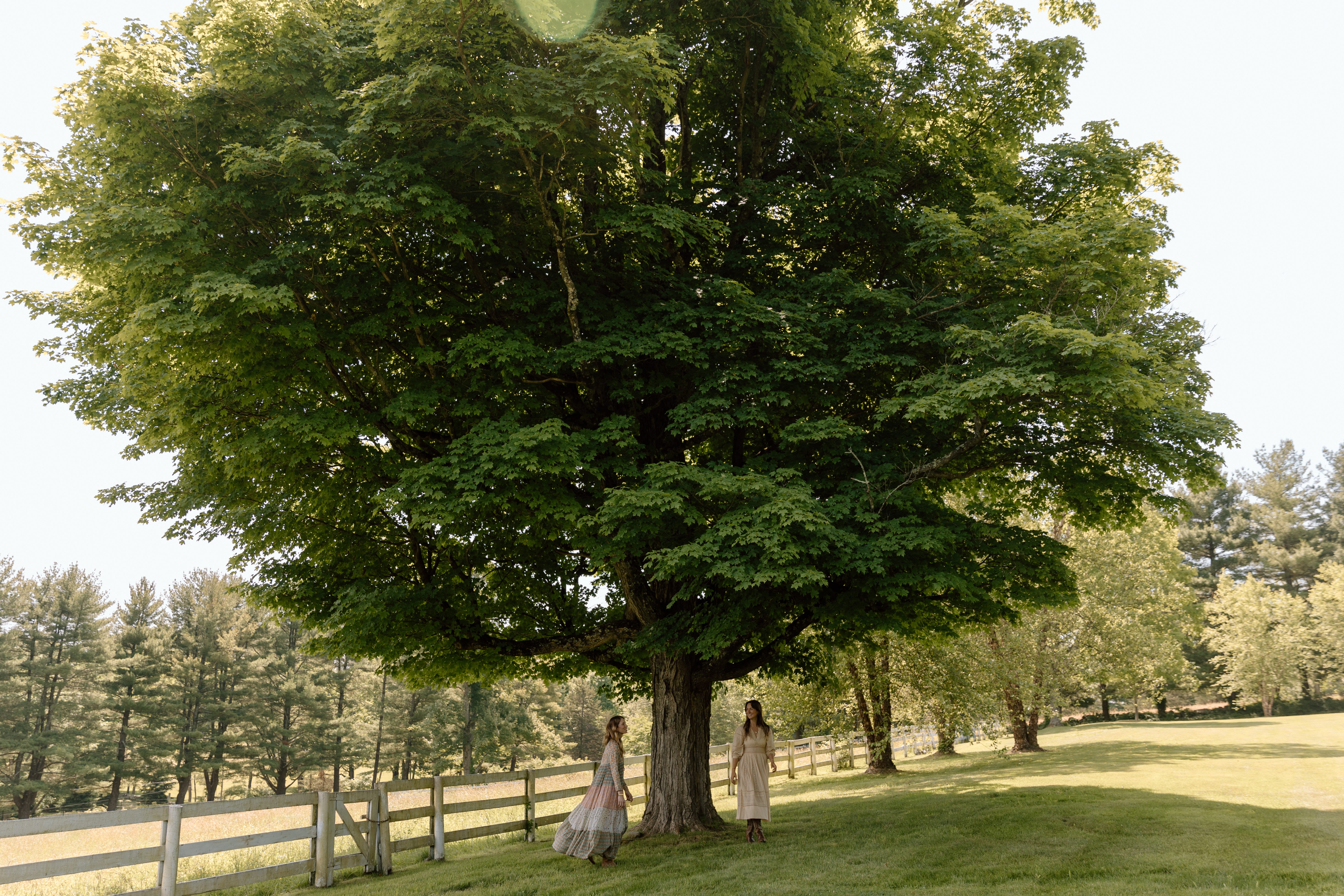
Is she the creative witchy herbalist, feet in the soil, speaking to the trees and stars? Is she the “trad” wife, in a sundress surrounded by children in a field milking a cow? Is she the sensual priestess, working with the powers of the womb space? Is she the boss babe spiritual CEO, seemingly able to “manifest” all her heart desires at the shift of her intention?
Or, is she only meant to be held in the images of goddesses and saints— “perfected” women, like Mother Mary, Brigid, Isis, and Mary Magdalene?
The truth is that the feminine is multifaceted, and this is why the “goddess,” once solely the ineffable oneness of mother-nature, gained many names over millennia as civilizations grew.
Ultimately, this transformation was the divine feminine expanding to mirror our complexities and uniqueness, which varied across both time and culture. Letting go is an organic part of growth and flourishing, but for all we’ve gained, much was lost—even before the divine feminine was relinquished to the shadows of our patriarchal world.
We seek to remember what’s missing, and our lost goddess is resurrecting through those who are called to remember her. However, the “divine feminine” is rising with a sense of separation that persists around defining and identifying what these words and ideas mean and seek to understand:
What is the feminine expression we need to heal and restore balance?
The One Called Magdalene
In this cacophony of well-intended expressions, Mary Magdalene sits in the middle—a historical figure with a name that translates to “tower,” indicating a preeminence that has been tarnished by centuries of lies. In an effort to parse truth from fiction, we set out to uncover Mary Magdalene from the chaos of confusion that surrounds her, and on July 22nd (her feast day), we began sharing a series of essays and conversations that laid the foundation of our work here at The Magdalene Thread:
To begin, read or listen to our manifesto, Perspectives and Possibilities on Mary Magdalene.
Women Sex and Sin (Podcast): How and why doctrine diminished the power of Mary Magdalene, and all women in early Christianity
Goodness in the Garden (Article): Illuminating the role of women in early Christianity has the power to restore spiritual sovereignty for us all
The Greatest Lie Ever Told (Episode): How and why the pernicious rumor of Mary Magdalene as prostitute was crafted and sold for 1,400 years
Fortress of Truth (Article): How the choice to speak "gnosis" to spiritual authority lies at the center of heresy-and how to transcend it
The Power of a Name (Podcast): How Mary Magdalene’s name is a treasure trove that guides us closer to the truth of who she was & means for us
Immaculate Deception (Article): Restoring Mary Magdalene and Jesus' female followers from the margins of the Gospel of Luke's masterful storytelling
Christ Maker (Podcast): Exploring the details of the mysterious anointing woman illuminates truth about the legacy of Mary Magdalene
A Tale of Two Sisters (Article): Mary, Martha & the matter of feminine worth. Is there really a better part?
Life After Death (Podcast): How the power of mindset and miracles lifts the veil on resurrection
As we have written and discussed, the issue at hand is not simply that Mary Magdalene was diminished. She very well might be the “missing” key to the metaphorical Kingdom of God, but it is important to “zoom in” even further on the details and recognize how she, and subsequently all women, were separated and splintered in the process.
We find Mary Magdalene in fractals, coming to life in pieces of treasure we put back together slowly. Each gathered piece of the whole is what we must view with a kaleidoscopic lens to fully understand, just like the divine feminine itself and the unique ways it manifests within each of us.
This is why Magdalene embodies an archetype of wholeness—she is beyond a singular historical person, holding all she encompasses, illuminates, and brings together as a modern manifestation of the ancient mother-goddess.
The Feminine Mystery
“Separation did not exist in the mythologies of the Great Mother,” writes Campbell, painfully echoing to us the radical split we have endured for the last few thousand years, and likely dating back to at least Babylon’s rise.
With Magdalene, we are called not to only remain in the realm of the esoteric, on the surface of where she is trending, but to return to the sacred scriptures of early Christianity—from the Bible to the gospel written in her name, and even farther back in time.
The first iterations of the Divine in Old Europe, the Levant, the Near East–the geographic area that was the birthplace not only of Jesus Christ and Mary Magdalene, but all of Western civilization–was that of the mother-goddess. Yes, she was feminine, but she was total in the way that many Christians now consider God represented as the Trinity. She was the Earth itself.
It is almost impossible for us to fathom what life, human consciousness, and spiritual practice would have been like for these ancient ancestors that venerated the mother-goddess as the central divinity from 9,000 to 4,000 years ago (roughly). It is equally as difficult to comprehend all the shifts that led to the splintering of the divine feminine, which was part of both the inevitable evolution of a rising civilization and a purposeful power-play that resulted in the subjugation of women.
All we cannot know has always been mirrored by the divine feminine herself—as we wrote in Goodness in the Garden:
“Mystery lives at the edge of fear and devotion–it is this razor’s edge that both elevated the goddess to the highest levels of reverence and the fear of her power that brought her to be demoted.”
Matriarchal Worth
Fear arises naturally when we go looking for the goddess, a felt sense of negativity that even goes beyond the notion within Christianity that the “goddess = bad.”
Yes, worship of the divine feminine was outlawed in 392 AD as Roman emperor Theodosius I, a few hundred years after the Hebrew scriptures had commanded it. “Rather, you must tear down their altars, smash their sacred stones, and chop down their Asherah poles,” reads Exodus, a reference to sacred trees and places of worship created to honor the feminine counterpart of God called Asherah by ancient Hebrews.
Even without the formality of Christian history, when we go looking for the feminine in esoteric books and through Instagram gurus, it can often still feel “off’,” for lack of a better expression.
There is this sense that we are not seeing the full picture, that only certain facets are being amplified above others, and a creeping sense of “better than” lurks around.
It is important not to forget that hierarchical power structures of control were not unique to Judeo-Christianity. Many spiritual traditions, religions, and even ancient mystery schools venerated by modern students of the esoteric, were rife with negative conditions.
This is why it is essential to realize it is not about Mary Magdalene, as a person or a singular goddess limited to any particular lineage or way. Any time we raise one above the rest, we end up in an imbalance of power that swiftly tips towards ranking order.
Matriarchy can be just as toxic as patriarchy—or any other “archy.” The same principle applies to pushing one form of spirituality over another—or any “way” that points the individual to external sources of authority.
Indeed, the ancient matter at hand in our modern world revolves around the concept of spiritual sovereignty, and the time has come to examine all the structures that both support and stifle our inherent worth.
The Great Unknowing
What is often cultivated with positive intentions of supporting others in thriving inevitably falls short when built upon the foundation of a mindset calling for a “better part,” a higher level of accomplishment to attain, or some sort of “Holy Grail” out there hidden on the horizon.
It is tempting to follow these pathways of “success,” with their clearly defined, organized, packaged, and promised outcomes of positive growth–spiritual or otherwise.
But what the divine feminine begs of us is something less certain.
The feminine is the darkness of the womb, the process of life, death, and rebirth—an embodiment of this sacred transformation that has mystified humanity, imbuing awe, wonder, and gratitude since the very start.
Courage is required to not only go searching for the divine feminine in this swirl of uncertainty and negativity around her, but then to double-down on the energetics of her innate unknown quality.
Vulnerability gives us strength to sit in the discomfort long enough to see what this darkness holds, but feeling all our feelings borders on a very real fear, ingrained in our survival wiring. Lions and tigers are not chasing us down anymore, but everyday moments of stress trigger us on a constant basis, from the news cycle to the mundane frustrations of daily life to larger traumas that affect each and every person.
Tribal instincts tell us to stay close to what is safe and known, but for some, the call to remember what has been forgotten is too loud to ignore.
Bravely, we might take one step outside the boundary lines, into the unknown, searching for the Divine we feel and know. But then we must remain in uncertainty, for what we desire to give shape and form to is just that—ineffable, beyond words.
The Birthplace of Love
“In the beginning was the Word, and the Word was with God, and the Word was God,” poetic prose of John that rings of truth.
What is the Word we are searching for?
What is God?
The Word is Love.
When we choose to believe that God is Love, that is what allows us to step into this unknown space, to grow and expand often in ways we cannot fathom, in a delicate dance between determination and surrender.
Magdalene brings us into this space, and yes, in doing so opens up ancient, hidden wounds, asking us about the stories we have lived and written.
What do we want to believe?
What do we desire to let go of?
In this adventure, we are met with a new range of feelings that may challenge us, from a transcendental sense of remembrance and connection to the primal rage that confronts us when we realize the extent of the violence, physical and psychological that has been wielded against the divine feminine-and therefore the woman.
But when we are anchored into Love, all of those troubling feelings and the narratives we’ve wrought around them open up, and new perspectives on old stories emerge.
Conscious Choice
It is tempting to demonize those who have diminished the feminine—following the urge to fight (burn the patriarchy!), to flee (run and ignore what is hard), or freeze (staying silent as we have been told to do as “good” Christian women).
Holding Love, above all, is what allows us to cultivate unity through paradox, transcending the left and right, good and bad, light and dark, right and wrong to ultimately remember the oneness that the divine feminine was meant to point to all along.
If we honor the sacredness of the Word, what are the stories that we want to tell?
Can we let go of the narratives that no longer serve us, not only in the modern world we exist within in this moment, but in the future we are co-creating through every choice, in each moment?
Mary Magdalene matters because she represents a story—a great story of the divine feminine—that we may breathe new life into with a Love that we have not yet known.
Fear is an illusion, there is only Love. This is a choice we make and one that Magdalene may guide us towards, as a beacon of Love that lights the way in troubled seas, bringing forth the new dawn that shines from within each and every one of us.
Seasons of Creativity
We meet you here not as gurus or scholars, but as best friends who are stay-at-home mothers, with eight children between our two families.
This collaboration is an extension of who we are, what we believe, and what we do even in the quiet of our own caves—where for years now, we have been studying, reading, writing, and dreaming of a day when we would bring this work to the world.
We are no strangers to the spiral nature of creativity, and what began as a limited series podcast, a summer project, has flourished.
We follow it into the unknown future with faith in our hearts, amidst the messiness of our own lives, evolving schedules, and the stages and phases of our growing children.
Our desire to be whole in motherhood as we co-create The Magdalene Thread has left us both inspired and stretched, at every turn.
We have learned not to worry about the “how,” but are devoted to nurturing this work in alignment with the “feminine” in its truest sense, and remain unwavering in our commitment to making this work sacred and sustainable as we continue to follow the friendship, flow, and magic that brought it all to life.
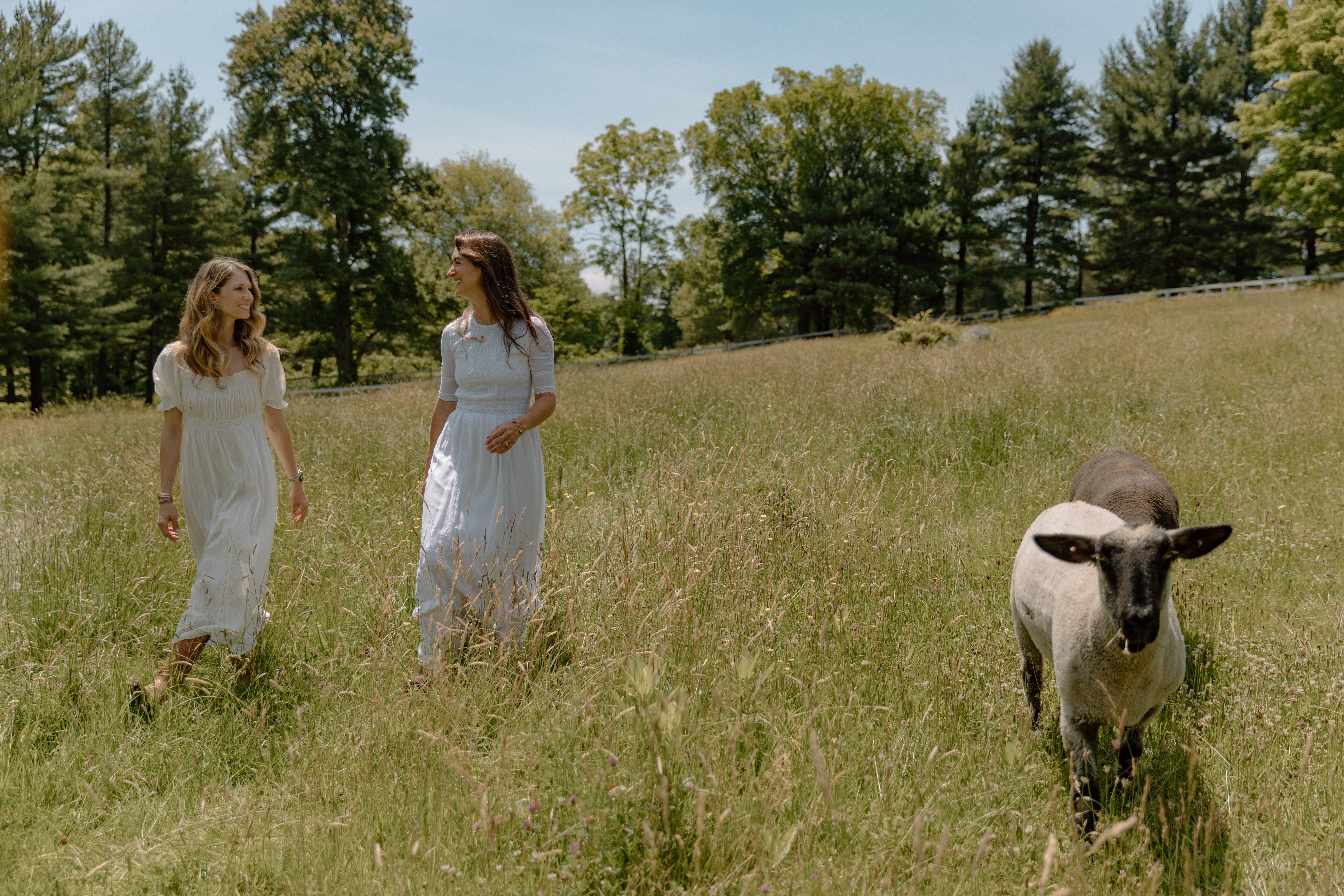
Since “attention is the beginning of devotion,” as our muse Mary Oliver says, we are deeply mindful of our own use of time and energy, just as we are endlessly grateful that you, dear reader, are here placing any of your sacred time and attention with us.
New facets to the wholeness of The Magdalene Thread are coming forth in the next few weeks and months—ones we can foresee and ones we are certain will surprise and delight us.
Shifting with the seasons themselves, we are leaning into new forms of creating this sacred work, and we cannot wait to reveal each one to you.
As is natural to the expansion and contractions of birth, we will be taking a pause in sharing here for a week or so.
An adventure awaits us, quite literally, as do some deep breaths and rest as we settle into the rhythm of fall and the days fade into winter.
Thank you for allowing us to share these treasures with you.
We are so grateful.
xx,

Fascinating! I can't wait to check out the other articles and podcasts you have done on this.
I have been following your work since you first put it out, and I realise that I have not yet expressed my gratitude to you directly for all that you've put into collating this tapestry of feminine wisdom for us all to dive into. It has been, and continues to be immensely valuable to my journey; an anchor that I come back to as my own questing ebbs and flows. Thank you both